
Myriad ways that drones, satellites, and common controls reshape ISR
Connecting platforms and data across domains is key to keeping ISR effective under attack.
Connecting platforms and data across domains is key to keeping ISR effective under attack.

The largest MoD investment detailed in the new strategy is a planned £880 million between 2026/2027 and 2029/2030 for intelligence, surveillance and reconnaissance, and space control "activities."


Supply chains are only as strong as their weakest link, which has been repeatedly proven to be true over the last few years.
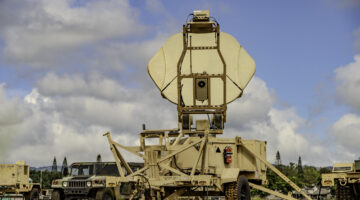
The Army's space superiority efforts are focused on countering adversary ISR satellites, as well as conducting "stratospheric warfare," Col. Joe Mroszcyck told Breaking Defense.

The new Radar Commercial Augmentation contracts reflect the companies' successful demonstration of their capabilities under previous NRO study contracts, according to the spy satellite agency.

The network will involve Denmark, Canada, Finland, Germany, Norway, the Netherlands, Sweden and Turkey.

The memorandum of understanding with Vantor marks the third partnership Rheinmetall has signed in recent months in the military space domain.

A commercial prototype in a sandbox is different from deploying AI across classified networks.

The new venture, Rheinmetall ICEYE Space Solutions, includes four German space startups as "initial" partners.

"The NRO is at the forefront of integrating AI into space-based ISR," a spysat agency spokesperson told Breaking Defense.

In her first major speech since taking the reins at NGA, Lt. Gen. Michelle Bredenkamp also said the agency has stood up a new Rapid Capabilities Office to speed integration of innovative commercial tech.

The first product in the MAYHEM line is dubbed MAYHEM 10, a launched effect system with a 10lb payload.
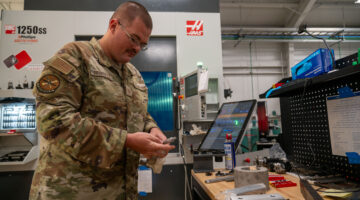
AI-enabled workflows accelerate production, but cybersecurity and governance remain central.

A recent study co-sponsored by NATO's Innovation Fund found that investment in European "Defence, Security and Resilience" startups increases by 55 percent in 2025.

"Budget permitting, NRO anticipates issuing additional awards later this year to expand these multi-phenomenology capabilities," the spy-sat agency said in a press release today.


The MQ-9B and Gambit Series represent parallel capabilities that address global challenges for security head-on.


The future of ISR lies in integrating human expertise with AI-driven analytic tools at scale.